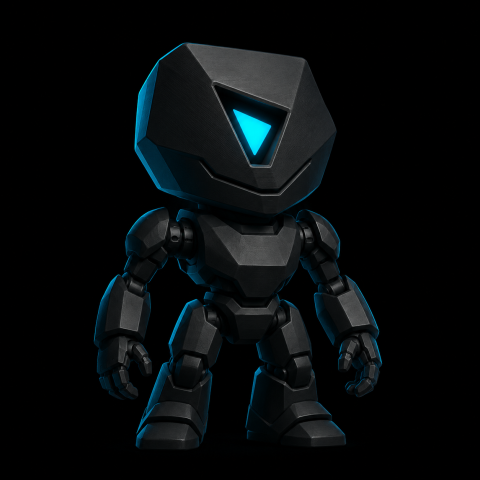
Meet the WAITDEAD sentinel — the same AI engine, with a face. It watches, tracks and alerts. It never shoots: it only signals.
An autonomous node that sees, decides and aims the camera at what matters — all on site, with no mandatory cloud. The AI runs at the edge and a pan/tilt turret keeps the target in frame. The same node works for security, agriculture and sports.
Framing tracking · not ballistic aiming · deterrence by signage only · data stays on your site
Meet the WAITDEAD sentinel — the same AI engine, with a face. It watches, tracks and alerts. It never shoots: it only signals.
The edge node
A single compact unit: the brain runs detection and tracking; the turret aims the frame. Built to live out in the field, with no permanent internet.
The brain of the node: it ingests the video, runs the AI and makes the decision locally. Without sending the video off the property.
An AI accelerator (Hailo-class) raises the frames per second so detection and tracking run in real time at the edge, within the field's power budget.
Servos on a PCA9685 driven by an ESP32-C3. The Pi sends it
aiming setpoints; the micro smooths the motion and releases the servos at rest.
What it does
The node's real capabilities, described without overselling. The goal is to keep the target in frame and report what matters — never to act on a person.
The turret aims the camera and the light to keep the target in frame as it moves.
When an intrusion is confirmed, the node escalates signals — always deterrent, never harmful.
It only alerts when a person or vehicle stays in a defined zone — not for wind, shadows or animals.
For sites with no power or fixed network. The node powers itself and reports with no prior infrastructure.
See it working
It's not a mockup: the AI detects, decides and the turret aims the camera live, on real video. The red box marks the verified intrusion inside the zone.
Red box = a person who stays in the zone (verified alarm); cyan = ignored. The turret aims the camera and floodlight toward the zone (framing tracking, not ballistic aiming) and the voice warning escalates N1→N2→N3. Live pan/tilt and FPS: it's real software running on real video, not a render.
Every frame goes through the same closed loop that runs on the node:
The same node
The node doesn't change: the AI model and the rules change. What we learn in one vertical carries over to the others because the compute, the turret and the pipeline are the same.
Verified alarms, intruder tracking and deterrence by signage on perimeters, warehouses, shops and properties. It works alongside your existing CCTV via RTSP/ONVIF (a 2026 market baseline, not an exclusive trick).
verified alarmdeterrenceon-premThe same node, out in the field: detection and tracking for wildlife deterrence and logging, powered by solar + 4G where there is no network or power. Field data without depending on the cloud.
solar + 4Goff-grid fieldlocal dataTracking and framing for clubs that already film with a phone or a GoPro on a mast and don't extract any analytics — local and private (minors, Law 25.326).
Honesty: Veo and Pixellot are the incumbents and the overhead angle is the ideal one; we offer analytics on the camera you already have, not parity with their dedicated rigs.
trackinglocal edgeprivateHow it's deployed
You start with the minimum and add capability when the site calls for it. Which level suits you depends on the site — we define it in the assessment. The quote comes after the survey, never blind.
AI camera, no movement.
Adds active framing tracking.
For sites with no power or network.
We don't publish rates because the right node and tier depend on the site (coverage, power, network, number of zones). The assessment is free and ends in a concrete proposal for your case — not in a generic price list.
Honest roadmap
We prefer to be clear about how mature each piece is. This is what's real as of today.
The AI pipeline (detection + tracking + verified alarm) runs reliably on an x86 PC. It's what you see in the demo. The pan/tilt turret on ESP32-C3 / PCA9685 is already built and driven.
The edge node (Pi 5 + AI accelerator) is the field product. We are bringing the same pipeline to that platform; it isn't yet benchmarked end to end on the Pi.
No facial recognition or biometrics (Law 25.326). No weapons: the deterrence is signage only. No field deployments we can't show — that's why the demo and the assessment are free.
Start with no commitment
Tell us what you want to watch or track (perimeter, plot, pitch) and we'll arrange a node demonstration or a site survey to propose the right tier for you.
We reply within 48 h. No commitment, no price until the survey.